
Before releasing a bag for international shipping, open the warehouse photos for your own order. Match the exact variant, measure the part that matters to you, then inspect the strap attachments and closure. If one remaining detail would change whether you keep the bag, ask for a photograph of that detail while it is still at the warehouse.
Read three photos of the same shoulder bag
This public listing for a black shoulder bag links to Weidian item 7529452453 and includes small, medium and large options. Its 6 October 2025 set has three ACBuy warehouse photos. Open the front view with zip and webbing tabs, the reverse with strap fittings and the overview with the loose strap and adjustable buckle. Follow each attachment from one frame to the next. Which face of the buckle is visible? Is a ruler aligned from the top of the bag to the inside of the strap?
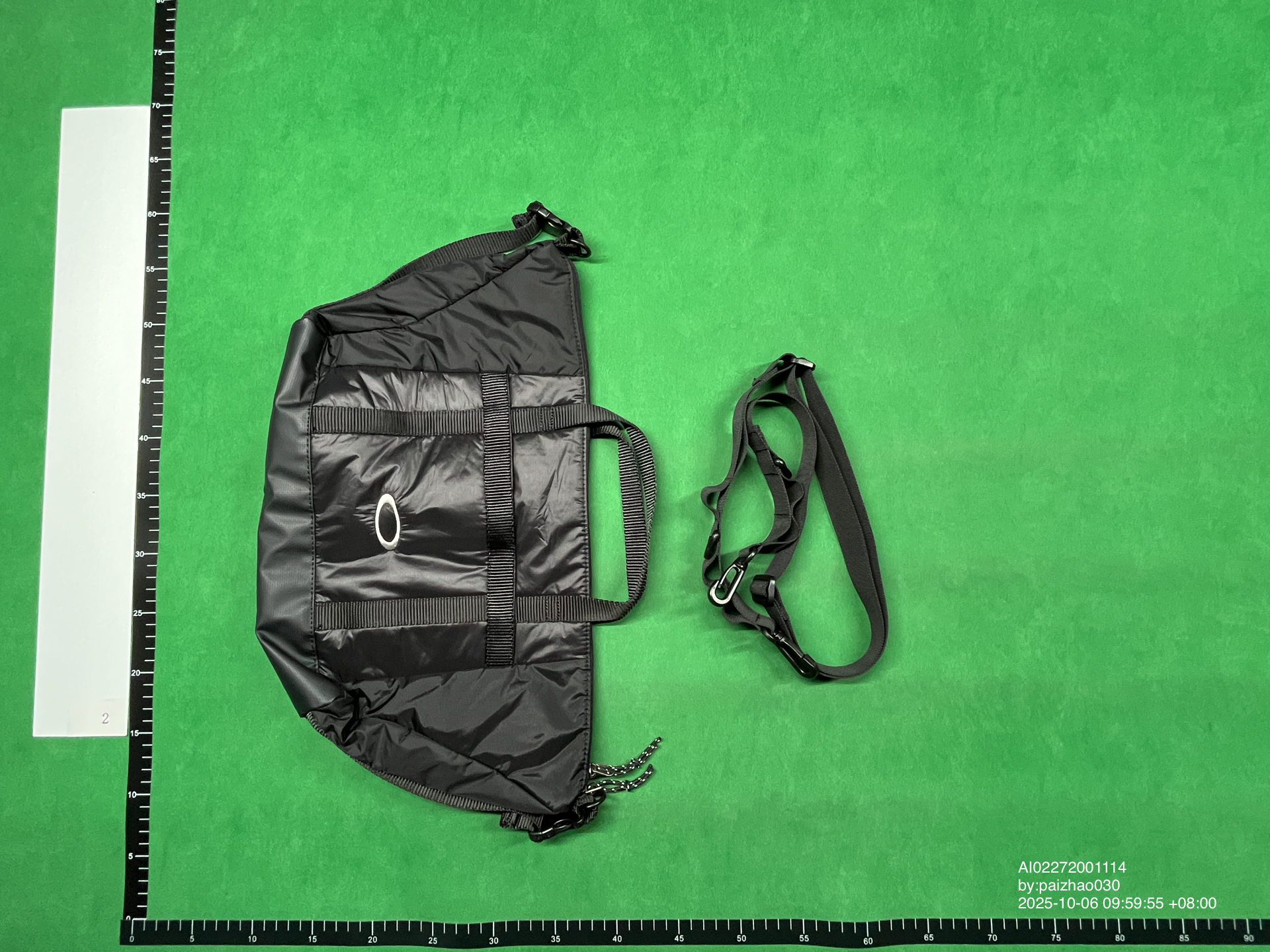
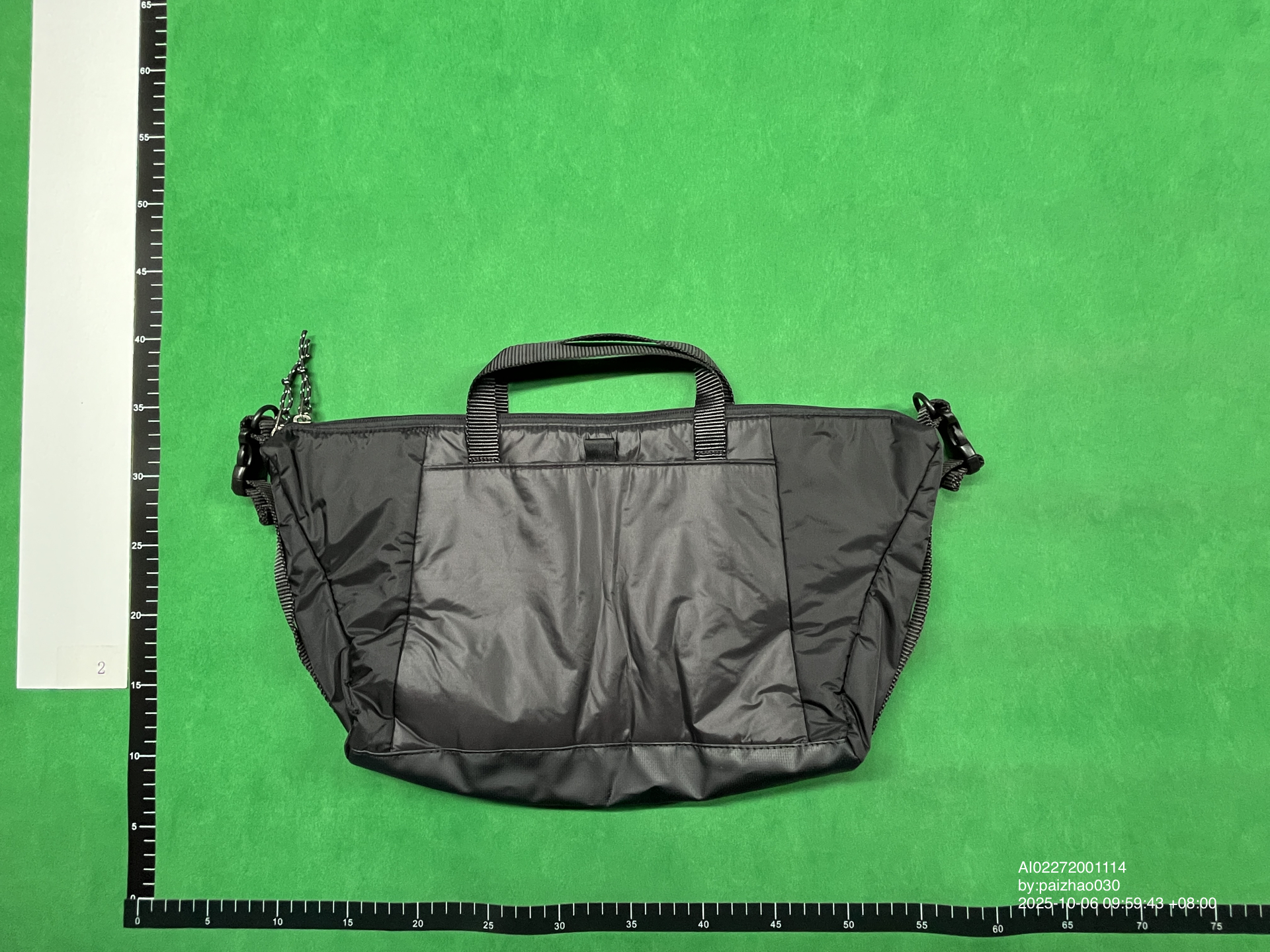
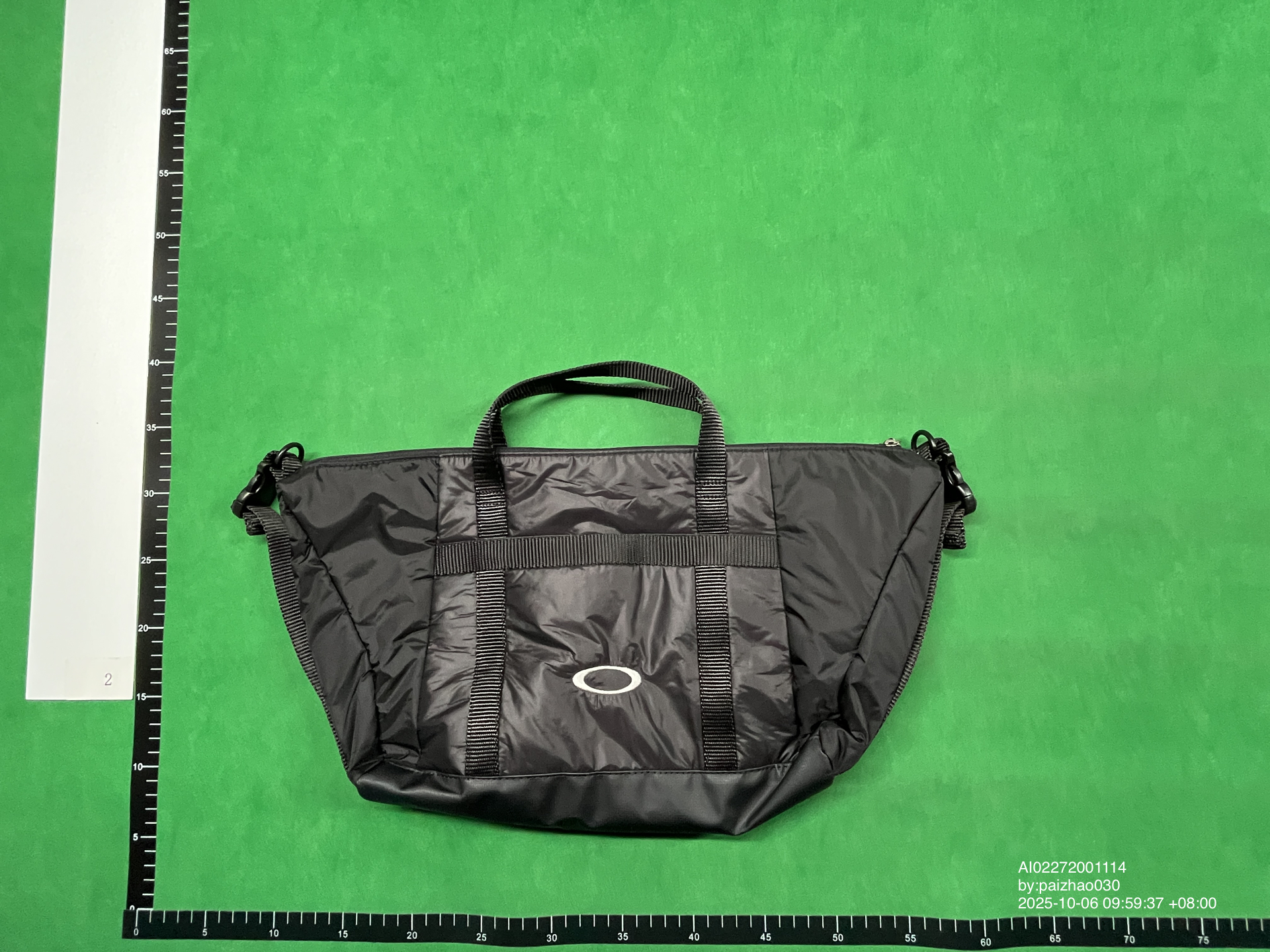
The overview helps you identify the included strap. It cannot tell you the drop at your preferred setting or whether the zip moves smoothly. Those questions call for a hanging measurement and a functional check on your own item. These are historical comparison photos from another agent; the three sizes share one listing.
Match the bag to the option you bought
Start with the order confirmation. A seller can use one cover photograph for a whole family of bags. The small and medium versions might share a shape and colour, yet only one has a removable strap. Copy the selected option into your notes. Open the seller’s size diagram and the photographs attached to that option. A remembered product name or an image saved from a spreadsheet is a poor substitute for the order record when you need to explain a mismatch.
In the warehouse photo, look for two features that distinguish your variant. Useful pairs include the number of strap rings and the pocket layout, or the base shape and position of the zip. Check loose components against what the chosen option includes. A strap may be tucked inside the bag. If it is absent from the overview, request a picture of the bag and its loose parts together before telling support it is missing.
Measure the body at the same points as the seller
Bag listings use “width” for different distances. On a trapezoid tote, the top edge can be considerably wider than the base. A photo measured across the top cannot settle a disagreement with a size chart measured along the bottom. Use the arrows on the seller’s diagram to choose the starting point, end point and direction. If the chart has numbers but no arrows, ask which edge the figure describes.
- Width. Lay the ruler across the specified edge. The zero mark and the opposite edge must both be readable. A ruler printed on a background mat can sit well behind the bag’s front panel.
- Height. Stand the bag in its usual shape and measure from the base to the top of the body. Leave handles out unless the seller’s diagram includes them. For a curved top, agree on the point before comparing figures.
- Depth. Ask for a side view with the base open to its natural shape. Folding a soft gusset flat or stretching it with a hand changes what the photograph shows.
Work through the measurement that decides the purchase first. If a rigid tablet has to fit, the outside width is only the beginning. A tapered opening, zip stops or a centre divider can reduce the usable space. Measure your device in its case at home. Ask for the clear opening between the stops and, if relevant, the inside width below them. An external size chart alone cannot answer that question.
Check how far the strap actually drops
For a shoulder bag, the useful dimension is often strap drop. Clip the strap to its intended rings and hold its midpoint up so the bag hangs naturally. Measure vertically from the underside of the strap at its highest point down to the top edge of the bag body. Show both endpoints in the same photo. Measuring the complete strap from clasp to clasp gives a different figure. Simply halving that length ignores the spacing between the rings and the shape of the suspended strap.
For an adjustable strap, say which setting you want. If the bag needs to fit over a winter coat, measure the drop on a bag that already fits over that coat. Take the measurement from the same points. Then ask for the longest usable setting on the warehouse bag, with the buckle closed and the adjustment hole visible. For a short handle, measure the vertical clearance at its centre. A photograph of the handle lying flat against the bag tells you little about room for your hand.
Read seams, strap rings and corners in context
Follow the path a load takes from the strap into the body. Start at the clasp, follow it to the ring and examine the tab stitched into the bag. A sharply focused image of a decorative front panel may leave both of these attachments out of frame. Ask to see the left and right tabs together, then request a closer view of the one that looks different. A short loose thread and an opening between two joined panels warrant different questions.
If a corner looks scuffed, ask for another angle with the protective wrapping moved aside where permitted. Glare from clear film can resemble a pale scratch. A second photograph of the same spot under diffuse light can show whether the mark follows the material or disappears with the reflection. Photographs can document a lifted edge, a split or an exposed stitch. They cannot establish the material composition, long-term strength or authenticity of the bag.
Ask one question about the closure
Choose the test that matches the mechanism. With a zip, a side view can show lining caught in the teeth. Asking for a picture open and another closed can also reveal a gap or obvious misalignment. Those two pictures still do not tell you how smoothly the slider moves through the curve. If smooth operation is essential, ask whether staff can check its travel gently and report where it catches. A request to test a closure is separate from an ordinary appearance check.
For a magnetic flap, compare the positions of the two fastening points with the bag resting in its natural shape. For a turn-lock, look at the post, slot and plate together. If a surprised buyer says “the bag won’t close,” the most helpful evidence is a single photograph that shows where the two parts meet. Avoid asking anyone to force a clasp, remove a factory seal or load the bag with weights to prove how strong it is.
Write a photograph request the warehouse can act on
Sugargoo describes a standard warehouse inspection for agent purchases and offers additional detail photography. Sealed packaging limits what staff can inspect. If the existing photo is blurred, identify the image and ask about a retake. If you need a new angle or a measurement, specify it and check the available service and fee in your account. Sugargoo’s warehouse QC service guide
A warehouse request might read, “Please attach the long strap to both side rings and use the longest buckle setting. Hold the strap at its midpoint. Take one front-facing photo with a tape running vertically from the inside of the strap to the top of the bag. Please include both tape readings.” Add the order reference in your private support message so staff can find the exact unit. For a closure issue, replace the strap instructions with a description of the affected corner or fastener.
Decide whether to keep, recheck or report the bag
Suppose a seller lists the base width, but the warehouse image shows a tape across the mouth of the bag. The figures differ and both photographs might still be accurate. Ask for the base measurement before opening a return request. If a new photo confirms the correct base width but your tablet still cannot pass through the opening, describe the issue accurately to the seller. A correctly described bag may be unsuitable for your particular use.
If the chosen size, strap and closure meet your requirements and the pictures show no unresolved issue, you can proceed with your packing decision. If an agreed feature differs or a visible seam has opened, keep the item out of the outbound parcel while you check the available after-sales options. Save the order option, the seller’s relevant image, the warehouse view and a short explanation of the difference. Check the deadline shown for your order promptly. Evidence is easiest to gather while the same bag is still available for inspection.